

Every major brand now sells a version of the same pitch: buy a mid-size power station now, then bolt on extra batteries later instead of buying a bigger unit upfront. It’s an appealing idea, and it’s not just marketing spin — but it’s also not free of trade-offs, and the details vary a lot more between Jackery, EcoFlow, BLUETTI, and Anker SOLIX than the glossy product pages let on. Here’s what actually happens when you go the expansion-battery route.
How Expansion Batteries Actually Work
The basic concept is the same across brands: your main unit has the inverter, the display, and the ports, while the expansion battery is essentially a dumb block of extra capacity that plugs into a dedicated port and gets managed by the main unit’s electronics. You’re not buying a second power station — you’re buying more fuel tank for the one you already have. That distinction matters because it means your output wattage usually doesn’t increase just because you added capacity; you can run appliances longer, not necessarily bigger ones.
Jackery: Double or Triple Your Capacity
Jackery’s approach on units like the Explorer 2000 Plus lets you add battery packs to double or even triple the base 2,042Wh capacity. Jackery also sells dedicated Battery Pack add-ons for its HomePower series (3600 Plus and 5000 Plus lines), clearly positioned as a way to scale a home-backup setup incrementally instead of buying the largest unit on day one. The appeal here is flexibility: start smaller, spend less upfront, and add capacity only once you know you actually need it.
EcoFlow: Compact, Stackable, But Not Cheap
EcoFlow’s Delta 3 Plus supports a stackable add-on battery that’s noticeably more compact than what some competitors offer, which matters if space is tight in a closet or RV cabinet. The catch is price: EcoFlow’s expansion batteries tend to cost a meaningful chunk of what a whole new base unit would run, so the “save money by starting small” math doesn’t always work out the way you’d expect. Run the numbers on cost-per-Wh for the expansion battery versus just buying a bigger base unit before you commit.
BLUETTI: The Most Aggressive Expansion Ecosystem
BLUETTI has arguably leaned hardest into modularity, with expansion batteries like the B300K and B500K letting you stack a base unit like the Apex 300 up to a genuinely massive combined capacity — some configurations push past 13kWh, and BLUETTI’s marketing highlights combinations reaching well into the tens of kWh for whole-home setups. If your plan is to eventually build a serious home-backup system, BLUETTI’s ecosystem gives you the most headroom to grow into without switching brands.
Anker SOLIX: A Step Backward on Purpose
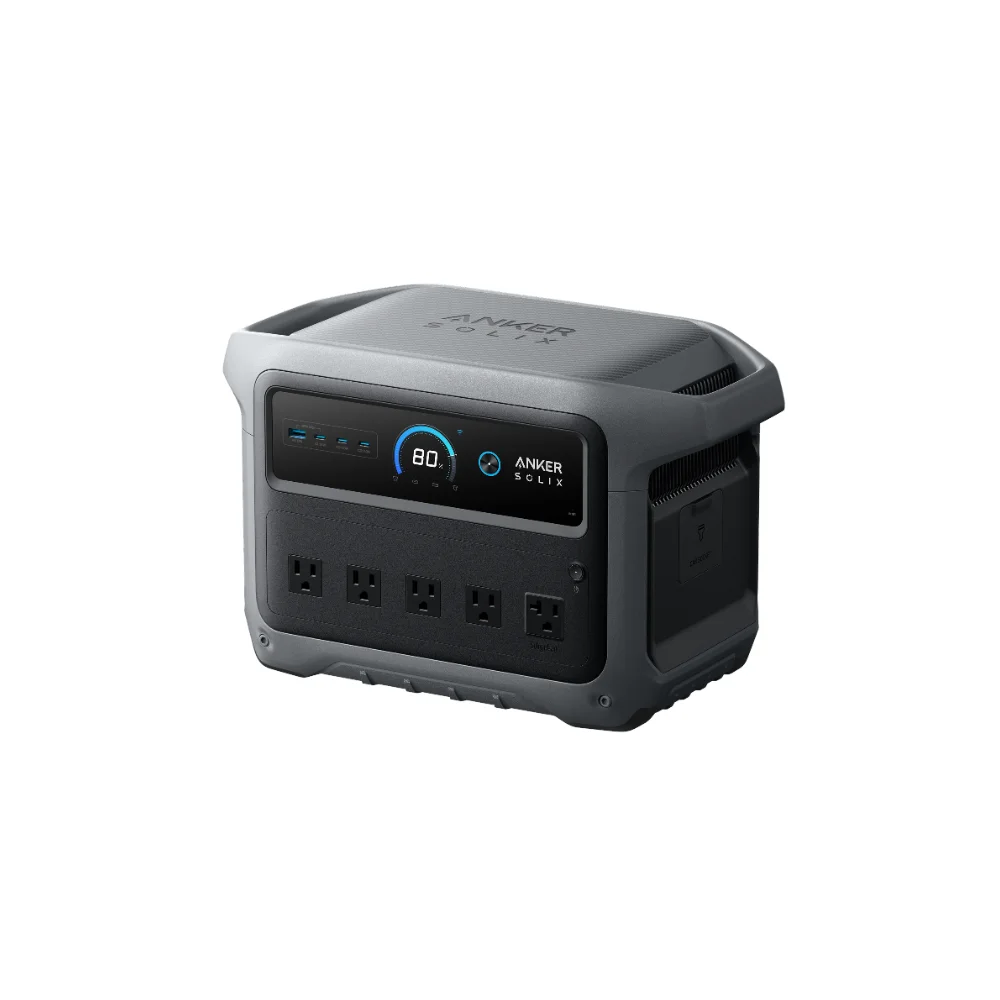
This is the detail I think more buyers should know before choosing a 1kWh-class unit: Anker actually removed the expansion port on the newer SOLIX C1000 Gen 2 that existed on the original C1000. The trade-off bought a lighter, faster-charging unit, but it also means that specific model is a fixed-capacity purchase — there’s no bolt-on path later. If expansion matters to you, you’d need to look at Anker’s larger SOLIX units instead, which still support scaling.
Goal Zero: Expansion for the RV and Van-Life Crowd
Goal Zero’s Yeti Pro 4000 pairs with a Tank Pro 4000 expansion battery, aimed squarely at van and RV owners who want to grow their system without a full rewiring project. It’s a similar story to BLUETTI’s approach — more capacity without more inverter, sold as a unit built specifically to stack cleanly on top of the base station.
The Real Math: Is Expansion Actually Cheaper?
This is where I’d slow down before assuming expansion saves money. Expansion batteries almost never cost less per watt-hour than the base unit did — you’re paying a premium for the convenience of not having to sell your old unit and buy a new one. If you’re fairly confident about your long-term capacity needs, buying the larger unit upfront is often the better financial move. Expansion makes the most sense when your needs are genuinely uncertain, or when you want to spread the cost of a bigger system across two purchases instead of one.
Who Should Actually Plan Around Expansion
- Buyers building a home-backup system in stages as budget allows, especially with BLUETTI’s or Jackery’s ecosystems
- RV and van-life setups where space constraints make EcoFlow’s compact stackable batteries appealing despite the price premium
- Anyone genuinely unsure how much capacity they’ll need long-term and who values the option to grow over locking in a fixed size
Who Should Just Buy Bigger Upfront
- If your power needs are predictable, a larger single unit is almost always cheaper per Wh than base-plus-expansion
- If you’re eyeing the Anker SOLIX C1000 Gen 2 specifically, know upfront that this particular model has no expansion path
My Take
I don’t think expansion batteries are a scam, but I do think they’re oversold as a universal money-saver when they’re really a flexibility premium. If you know you’ll eventually need more capacity, buying the biggest unit you can afford now is usually the cheaper path in the long run. Expansion earns its keep when your needs are genuinely unclear, or when a brand’s ecosystem — BLUETTI’s especially — makes the incremental cost low enough that flexibility doesn’t cost you much. Read the actual per-Wh pricing on the expansion battery itself before assuming it’s the budget-friendly option; sometimes it very much isn’t.
Frequently Asked Questions
Do expansion batteries work with any power station?
No — expansion batteries are proprietary to each brand’s dedicated expansion port and typically only compatible with specific models within that brand’s lineup. Always check compatibility with your exact model before buying.
Does adding an expansion battery increase output wattage?
Generally no. Expansion batteries add capacity (Wh), not power (W) — your continuous and surge output limits stay tied to the base unit’s inverter, not the total stored energy.
Is it better to buy a bigger unit or start small and expand later?
If your future needs are predictable, buying bigger upfront is usually cheaper per watt-hour. Expansion is worth the premium mainly when your needs are genuinely uncertain or your budget needs to be split across two purchases.
Related Reading
- How to Choose the Right Power Station Capacity (Wh) for Your Needs
- Best Large-Capacity Solar Generators for Extended Off-Grid Living
- Anker SOLIX C1000 Gen 2 Review
- Jackery Battery Pack 2000 Plus Review: Is Doubling Your Power Station’s Capacity Worth It?
This post may include affiliate links — if you buy through them, we may earn a small commission at no extra cost to you. It doesn’t change what we cover or how we rank anything.
Khalid Zirari is the founder of Marjajo, where he researches and compares portable power stations, solar generators, and related backup power gear to help readers cut through spec-sheet marketing and find the right fit for their needs.